The Ultimate Guide: Should You Change Your Transmission Fluid?
Changing the transmission fluid is a hot topic these days, and it’s something I’d like to talk about. My advice to anyone who wants to keep their car running longer is to maintain everything, and the same goes for the transmission.
The main issue here is that there are many misconceptions surrounding this, which can be confusing for the average owner. Good news for you is that I’m here to explain things
Should I Change My Transmission Fluid or Leave It Alone?
You should definitely change the transmission fluid even though the manual may not state that. I’m not going against what manufacturers specify, but there are certain situations and conditions when you’ll want to act differently. Even if you’re not sure, you can always consult your local mechanic or the dealership and see what would be the best course of action.
So, why should you change the transmission fluid? The idea is simple: this service costs a couple of hundred dollars, while a transmission replacement costs a couple of thousand. It’s a pretty straightforward decision, and you can understand why I recommend having the transmission fluid changed.
What Does “Lifetime Transmission Fluid” Actually Mean?
Lifetime transmission fluid doesn’t mean that the fluid will last for as long as you drive the car. Automakers consider lifetime fluids to last as long as the warranty or a certain mileage. It may sound weird, but there’s a good reason for that.
When the dealer sells you the car, you get an outline of all the service expenses. Adding the transmission service bumps the ownership costs, so you might start reconsidering.
Transmission Service Conflict Between the Manufacturer and the Builder
Now let’s talk about the elephant in the room. Car manufacturers’ specifications and those from the transmission makers differ. This is because the car maker wants to sell you the car, so presenting lower prices is a good selling point. The transmission builder already sold the transmission, so it doesn’t care about the prices. This means you can get all the information about the services, such as specs, the type of fluid, and intervals.
When Should You Not Change Your Transmission Fluid?
You should not change your transmission fluid if you’re already past the normal interval mileage or if you don’t plan to keep it for long. I know it sounds wrong, but there’s a good reason for this.
If you’re already over the mileage, then the idea is not to touch something that’s working. Research shows that the fluid loses its properties over time, and in addition to that, the metal particles get stuck throughout the entire transmission.

Replacing the fluid on a high-mileage transmission will clean up some of that gunk, which might work, but it also might not. The detergents will clean things up a bit and cause the transmission to work weirdly.
Realistically, this is a lottery, and some owners have seen some improvements, while others have made things worse. There’s no real way to tell, which is why we often recommend leaving it alone if it’s working well enough.
Why Do You Actually Need to Change Transmission Fluid?
Changing the transmission fluid is a must because it cannot operate and protect your transmission for decades. This is especially important for people who do short trips around town. High temperature or massive variations can become a problem over time because the fluid won’t be able to do its job like it did when it was new.
The chemicals and additives, as well as the oil itself, start to break down after a couple of years. There’s no specific age or mileage because we don’t drive our cars the same, but as a general consensus, it’s about 5 to 6 years or around 50k miles. Note: this is my rule of thumb for my car and my driving habits, so your mileage may vary.
What Is the Difference Between a Transmission Drain and a Flush?
The simplest explanation of the difference between a drain and a flush is the amount of fluid you’re replacing. With a drain, you replace about a third of the fluid, while with the flush, you’re replacing all of it. I say about a third because each model is different, so it may not be the same for all of them.
It’s also important to note that during a flush, you’re not just dropping the old fluid and replacing it with the new one. You’re also replacing the filter and doing a bit of cleaning up inside the transmission.
Is It Better to Do a Drain-And-Fill or Flush the Transmission?
It’s generally better to do a drain and fill rather than a flush because you minimize certain risks. This approach allows you to replace a portion of the fluid for a bit of a refresh, and it’s best for transmissions that have been maintained in the past.
The flush option is not a bad one, but it carries certain risks. This one is recommended for transmissions that are already having issues, with the hope that it solves them. Most mechanics recommend this as an alternative to replacing the transmission altogether.
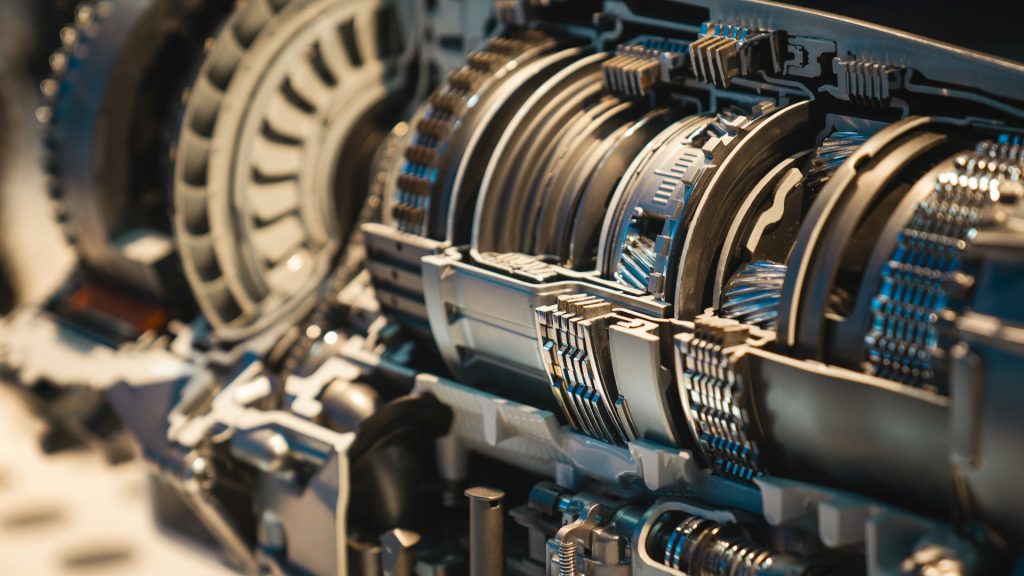
While it seems like a good choice, there’s a risk. Remember that gunk I mentioned earlier? Well, during a flush, there’s a good chance that some of it might get lodged somewhere where it shouldn’t, causing even bigger issues.
Realistically, a full flush is usually a good first choice if the transition isn’t working well, so you want to try it to see if that would work.
How Do I Know if My Transmission Fluid Needs to Be Changed?
Even though you should change your transmission fluid regularly, there are signs that tell you that you’re overdue. The most common signs that you need to change your transmission fluid are:
- Shuddering
- Slipping gears
- Taking longer to engage a gear
- Struggling to go into drive or reverse
In addition to these, if you’re a bit mechanically inclined, you can take a look at the transmission fluid to determine its health.
- Red fluid: This means that the transmission fluid is good and healthy, and you have nothing to worry about.
- Dark brown fluid: This is when the fluid has been in use for a while, and it’s probably a good time to start thinking about doing a drawing and filling.
- Black fluid: This is the worst possible scenario, one where you probably saw the signs I outlined before. In addition to the color, you’ll sense a burnt smell, meaning you definitely overdone it.
Should You Change Your Transmission Fluid?
Yes, you should change your transmission fluid, at least in most cases. While this kind of service is recommended, it’s also important to look at all the aspects.
If your car has been maintained regularly, and the transmission wasn’t neglected, a drain and fill is what you should do. If it’s something more severe, then a flush might be worth considering before you start thinking about a new transmission.
A transmission fluid change is cheaper than replacing the whole transmission, so don’t skip out on it.
FAQs
What Happens if I Never Change My Transmission Fluid?
Over time, the transmission fluid degrades and cannot protect the metal components inside. This can increase friction and cause irreparable damage, which is costly to fix.
Can Changing Transmission Fluid Cause Problems?
Changing transmission fluid causes problems under certain conditions. If the transmission has been regularly maintained, then a simple drain and fill has a very low chance of causing problems. On the other hand, a neglected transmission can be a problem, especially if you consider doing a flush. It can push the gunk in place where it shouldn’t be and make things worse.
How Much Does It Cost to Change Transmission Fluid?
The cost to change the transmission fluid can be anywhere from $100 to $300, and a lot of things can impact the cost. The transmission model, the type of fuel, and the shop that does the service are the main determinants when it comes to the price. A flush is a more expensive job and can reach $500 or more. Keep in mind, both are cheaper than the several-thousand-dollar job to replace the transmission.
Can I Change the Transmission Fluid Myself?
You can change the transmission fluid yourself with some basic tools and some mechanical know-how. You’ll find a repair manual for most modern cars that outlines the process, and as long as you follow it, you’ll be good to go.