The Flying Tesla Roadster: Tech Marvel or an Expensive Marketing Stunt?
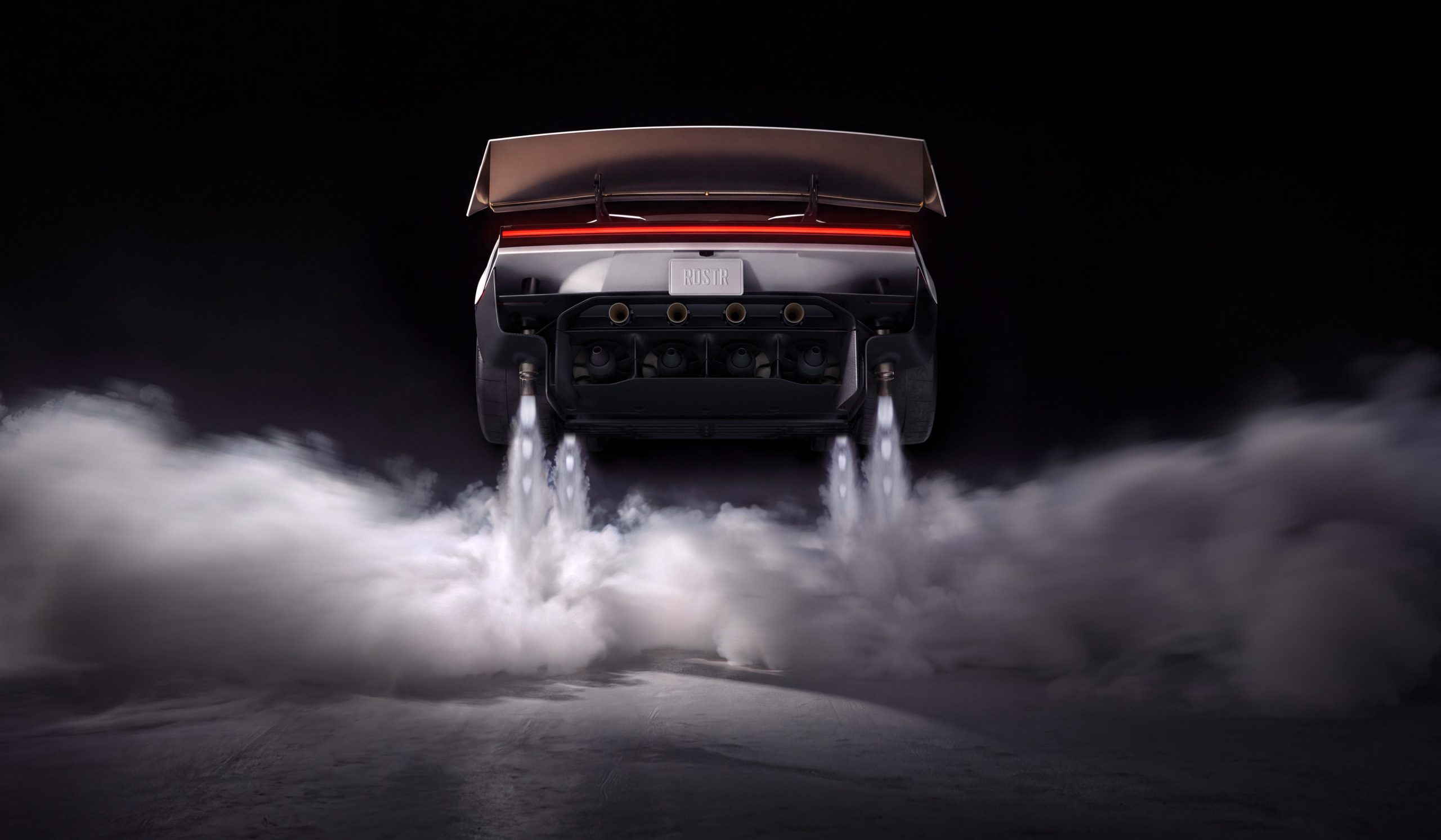
Every breakthrough in the automotive industry begins as science fiction before it becomes a reality. For decades, the idea of flying cars was limited to movies, cartoons, and kids’ drawings in kindergarten, until a certain automaker decided to change that. The flying Tesla Roadster was unveiled a couple of weeks ago, and we all stopped to watch it. Interestingly enough, we couldn’t stop talking about it afterwards.
In most people’s opinions, mine included, there’s a fine line between an industrial breakthrough and staging an elaborate mechanical theatrical show. We should celebrate pushing the boundaries of what’s possible, but as consumers, we should see past the smoke machines, staging, and most importantly, all the headlines we see.
Elon has been promising a flying car, and the Tesla Roadster delivers on that promise, technically. With that said, how did we get here, and can we get behind the wheel of one?
The Roadster That Started It All
To understand the spectacle surrounding the promises of the modern Tesla Roadster, we need to go back to 2008, when the brand wasn’t a household name. Before the Gigafactories and models you’ll see at every corner, Tesla was Elon’s little garage project that wanted to offer an electric car that’s not boring.
The original Roadster was far from an engineering marvel. It was a combination of an aluminium tub from the Lotus Elise, a high-revving AC induction motor, and a battery pack made of cells found in laptop batteries. The result was a vehicle that delivered on its promise, partially, and was something that got many enthusiasts excited.
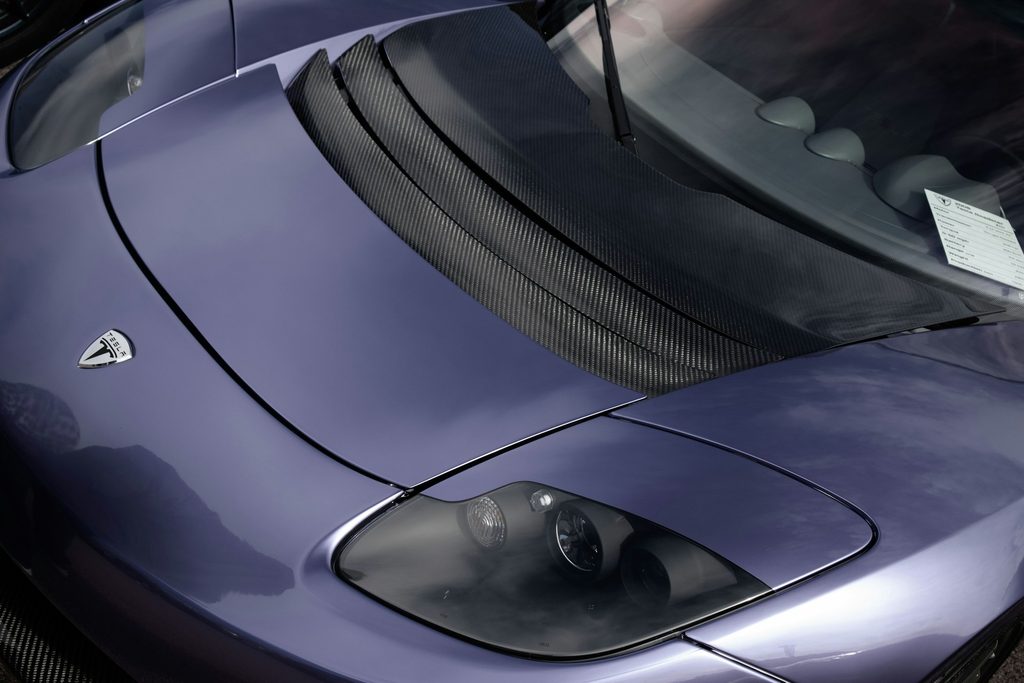
By today’s standards, the original Tesla Roadster was crude, not too practical and, based on owners’ thoughts, a headache to charge. But despite that, it was capable of sprinting to 60 in less than 4 seconds and had over 240 miles of range, a debatable number, but that’s what the brochure said. Simply put, it showed that one guy’s vision can become a reality, more or less, and put some more expensive and powerful cars to shame, courtesy of the EV torque.
It was sold from 2008 to 2012, selling 2,450 raw, analog, and flawed units, which might not seem impressive today, but they did help set the financial foundation for Tesla’s Model S, the one that helped put it on the map and make it a common carmaker name.
Engineering Marvel Wrapped in Pure Theatre
When Tesla staged a demonstration showing the new Roadster leaping into the air, levitating and stabilizing itself, the internet went wild. Skipping queues, flying to work, or driving upside down in a tunnel are a handful of things that we thought we’d see in our lifetime, maybe even own a vehicle that can do it. But, can we really?
From a technological perspective, the Tesla Roadster really is a marvel. The system relies on thrusters and a system capable of delivering 10.000 PSI, which is a lot. As a comparison, your car’s tires are at 30-something, maybe 40. All of this is courtesy of SpaceX, Elon’s other brand that does technological marvels, so Tesla borrowed the technology from the rocket scientists.
The achievement deserves applause, but once you strip the cinematic smoke and effects, you can see the truth behind the Tesla Roadster. The flying car’s demonstration is an expensive parlor trick, one that even Tesla’s fine print admits they cannot and will not deliver in a daily driving model.
The reality behind the flying Tesla Roadster
If you look past the headlines, including the one in this article, you’ll need to understand that Tesla’s Roadster didn’t exactly fly, at least not in a traditional sense. It didn’t cruise across open airspace or navigate some imaginary course and behave like an eVTOL. Instead, it did a controlled parabolic burst, so the proper term would be the jumping Tesla Roadster.
Considering the amount of thrust needed to do these gymnastic stunts, the tanks will keep you afloat for a couple of seconds, after which you’ll need a refill. Now, there is a conflicting statement about the recharge. Elon says the car has a compressor that can recharge the tanks itself, while engineers from the company claim that it needs an external charging system that takes a couple of hours. Based on past events with this company, I know which way to lean and who to trust.
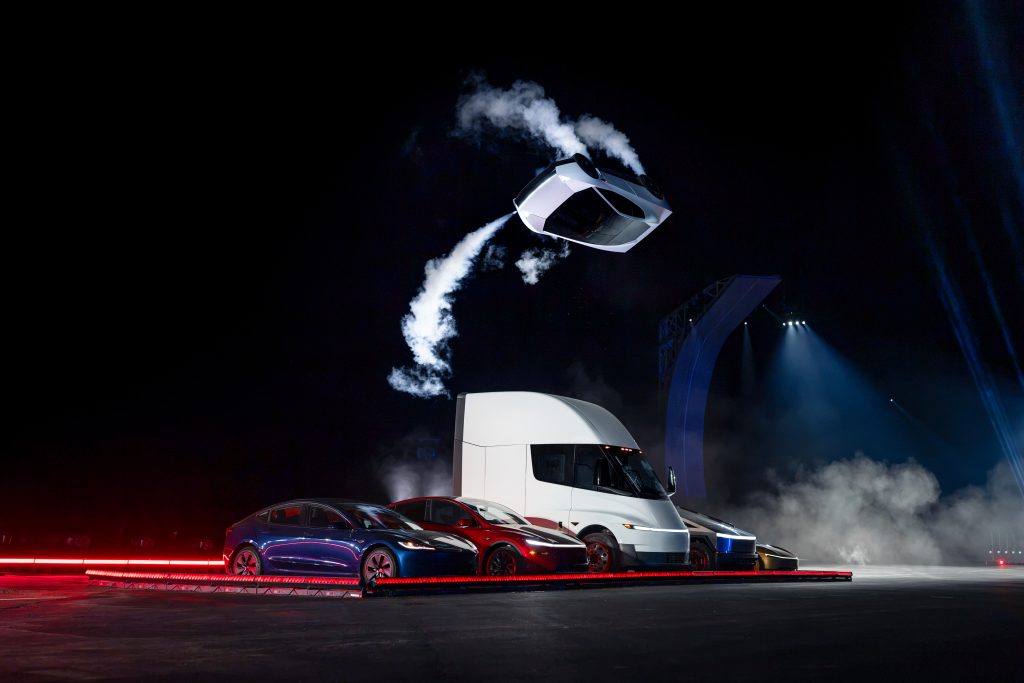
This means there are a few penalties if this version of the Roadster ever hits the streets. You have a few seconds of thrust and then a couple of hours of recharge, meaning it’s one of the least practical features I’ve seen in a car ever.
Then there’s the weight. Tanks that can hold 10.000 PSI need to be durable, which means they need to be heavy. On top of that, you have the weight of the system and the compressed air, which causes a problem. With that said, I do have to admit that aiming for roughly 3,700 lbs isn’t all that bad, and actually impressive. The caveat here is that this is for the lightest version, the one that people might get to own, which doesn’t include the rockets, tanks, and all the other accompanying hardware.
If the Tesla Roadster was a presentation of how a company can integrate aerospace tech, then the company deserves massive praise. On the other hand, as a transportation solution, this is just another one of Elon’s party tricks.
Tesla Confirms the Flying Roadster won’t hit the streets
Critics and Tesla haters don’t need to bend over backward to see if the flying Roadster will be seen on the streets. It won’t, and Tesla quietly confirms that. The Rocket trim, the one that can “fly,” is invite-only, and I’m guessing not a lot will get that invite. In addition to that, there is a note that it’s not approved for public use, and there are two reasons behind that.
First is the noise, yes, there is one. EVs are quiet, but thrusters aren’t, and these can reach between 130 and 140 dB at the nozzle exit, which is above the maximum allowed. There’s also the physics side of things. That much pressure from a nozzle means the car will technically lift off, but it will also shoot gravel all over the place like shrapnel.
Tesla is aware of this, which is why the model we all saw at the unveiling will be limited, if one is even produced and delivered to a customer. Use cases will most likely be some rich guy’s showpiece or closed-course demonstrations.
Will the Regular Tesla Roadster be Available?
If we remove the rocket technology from the Roadster, the main question is will the regular, road-going model be available? Tesla says no guarantees, literally, and if past events with this company are anything to go by, reservation holders shouldn’t be too hopeful.
The second-generation Tesla Roadster was somewhat announced back in 2017 when it drove out of the back of a Tesla Semi truck. The company then claimed that it would begin deliveries in 2020, a target that was moved a few times. Okay, the pandemic did its thing and production was postponed, but after that, Tesla postponed it a few more times. Today, Elon claims that production is pushed toward 2028, so it’s an 11-year delay, probably.
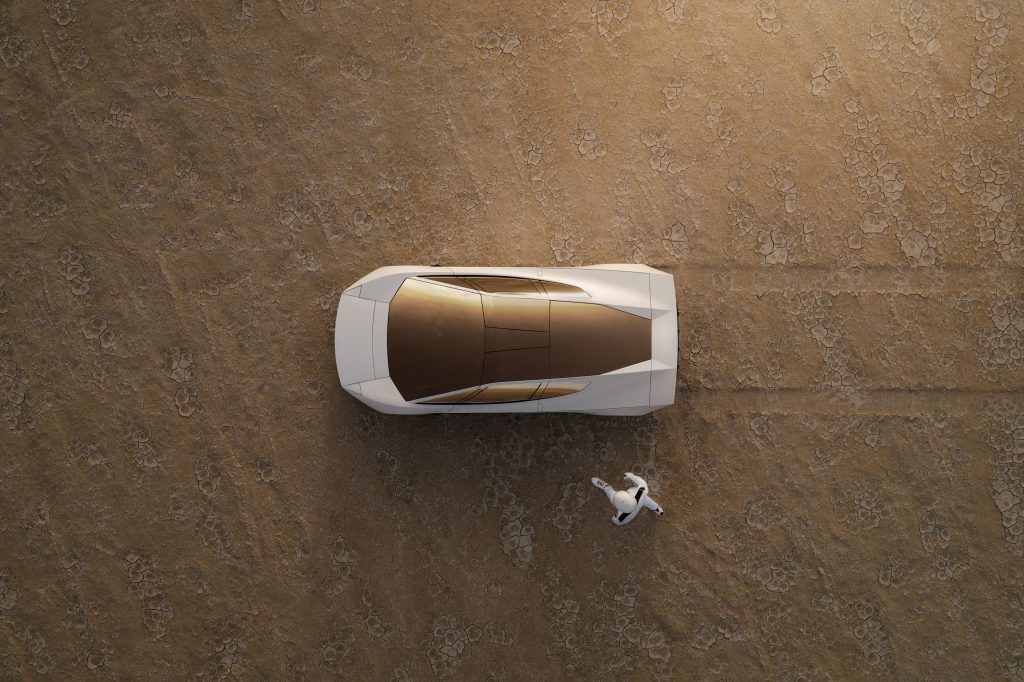
In some ways, I can understand the delay and the strategy behind it. The Tesla Roadster is a halo car, and from a financial side of things, it makes sense for the company to focus on the mass-produced models, the ones that the company actually makes money off. This is also a theme with Tesla as a company, getting a promise, creating a hype and then waiting for something that might never arrive.
As I say this, there’s no denying that Tesla is still making money of a car that doesn’t exist and might never exist. Reservations are $50,000 or $250,000 for the Founder Series, and there’s no price tag on the actual vehicle, so that’s a lot of money for something that’s just a theoretical product. The company also isn’t hiding that it’s a “design development,” along with any specific information hidden behind “To be determined”.
This means that Tesla has a cash flow for a toy that seems to have come out of The Jetsons cartoon and isn’t hiding that it might not ever reach dealerships. Their website has a very blunt legal disclaimer: “We cannot guarantee when your vehicle will actually be delivered or if it will be delivered.” In regular folk talk, this translates to: “Thank you for your money, don’t get your hopes up about getting the Roadster.”
The Flight the Tesla Roadster Will Never Take
The automotive industry is filled with conceptual prototypes, ranging from Chrysler’s Turbine Car from 1963 to the fan-assisted Brabham BT46B. They pushed technological boundaries and proved that bold concepts are possible. With that said, their existence is outside the reality of mass-produced manufacturing.
In 2008, Tesla took a lightweight Lotus chassis and kickstarted the modern era by solving multiple problems with EVs from that era. The Roadster proved that electric cars can be fast, have good range, and don’t need to be boring daily commuters.
Fast forward almost 2 decades later, Tesla shows us that it can once again push the boundaries of what we thought was possible, but with a lot of caveats. Getting called a flying Tesla Roadster is a bit of a leap, pun intended, but it’s still a feat of engineering.
Making an EV and strapping thrusters to it shows that it’s possible and the Roadster can take a brief flight, but that doesn’t mean you’ll cut the queue next time you’re stuck in traffic. Calling this a flying car that we can drive to work is believing in an optical illusion that even Tesla’s legal disclamers refuse to endorse.